The Fraudulent Machine That Inspired Real Ones
Wolfgang von Kempelen's chess-playing automaton fooled Europe for decades and planted the seed of machine intelligence in the public imagination.
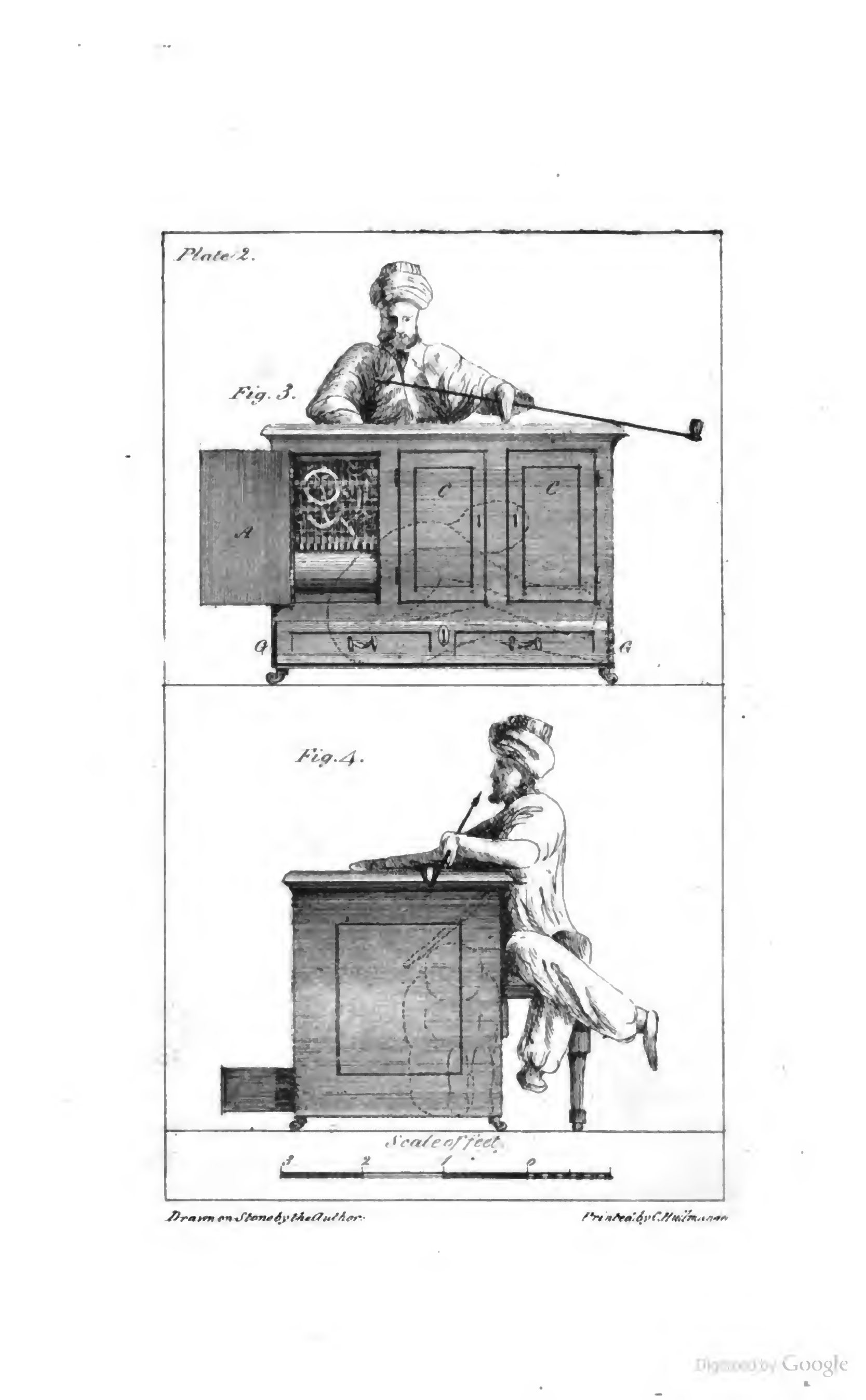
Willis, Robert, 1800-1875 / Public domain
The Automaton Chess Player had excited so universal an interest, that, to a certain extent, a solution of the mystery was considered almost as a matter of course.
— Edgar Allan Poe
In 1770, Wolfgang von Kempelen unveiled the Mechanical Turk, a chess-playing automaton that captivated audiences with its seemingly intelligent gameplay, only to later be revealed as a clever hoax.
What happened: In 1770, Wolfgang von Kempelen, a polymath from Bratislava, created the Mechanical Turk, a chess-playing machine that toured Europe and America, astonishing spectators with its ability to play chess at a masterful level. The Turk was a wooden cabinet with a life-sized figure of a turbaned man at the front, and it was believed to be an autonomous machine. However, the secret was that a human chess master was hidden inside the cabinet, controlling the machine’s moves. The Turk’s successor, Johann Nepomuk Mälzel, continued to tour with the machine, maintaining the illusion until the 1850s. Wikipedia — Turk
Why it matters: The Mechanical Turk sparked genuine philosophical debates about the nature of intelligence and the possibility of machines thinking. It influenced the work of thinkers like Charles Babbage and Edgar Allan Poe, who wrote about the Turk in his essay “Maelzel’s Chess Player.” The Turk’s legacy lives on in the modern concept of hidden human labor behind seemingly intelligent systems, such as Amazon’s Mechanical Turk platform. This historical hoax continues to serve as a cautionary tale about the complexity of attributing intelligence to machines. Maelzel’s Chess Player by Edgar Allan Poe
Further reading:
Why This Mattered
The Mechanical Turk was a celebrated hoax — a chess-playing 'automaton' that secretly hid a human operator inside. Yet it sparked genuine philosophical debate about whether machines could think, influencing thinkers from Charles Babbage to Edgar Allan Poe. Its legacy lives on in Amazon's 'Mechanical Turk' platform and as a cautionary parable about the hidden human labor behind supposedly intelligent systems.