Elephants Don't Play Chess
A rebel roboticist published a manifesto arguing that true intelligence doesn't come from abstract reasoning — it comes from having a body in the world.
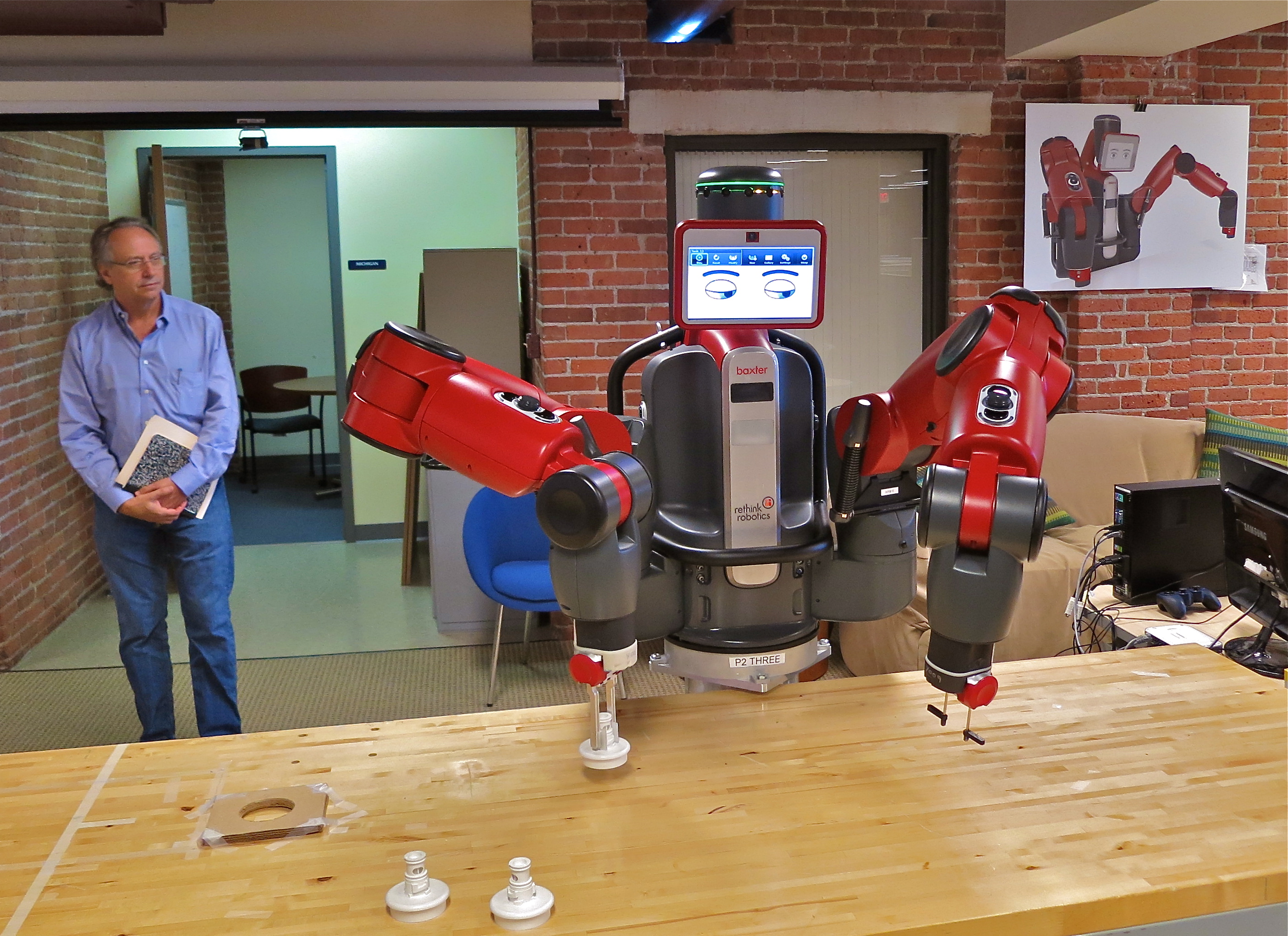
Steve Jurvetson from Los Altos, USA / CC BY 2.0
The world is its own best model.
— Rodney Brooks
In 1990, Rodney Brooks published “Elephants Don’t Play Chess,” a seminal paper that challenged the prevailing paradigm of symbolic AI and laid the groundwork for behavior-based robotics.
What happened: In 1990, Rodney Brooks, an Australian roboticist and Fellow of the Australian Academy of Science, published the influential paper “Elephants Don’t Play Chess.” This work criticized the symbolic approach to artificial intelligence, which relied heavily on internal symbolic representations and rule-based systems. Instead, Brooks advocated for a bottom-up approach, emphasizing the importance of physical interaction with the environment in the development of intelligent behavior. This philosophy underpinned his subsumption architecture, a framework for building autonomous robots that could navigate and interact with their surroundings effectively. Rodney Brooks - Wikipedia
Why it matters: Brooks’ critique of symbolic AI and his introduction of the subsumption architecture had a profound impact on the field of robotics and artificial intelligence. His argument that intelligence arises from the interaction with the physical world, rather than from abstract reasoning, influenced the design of Mars rovers and modern embodied AI research. This shift in thinking also anticipated the current trend away from top-down knowledge engineering towards more data-driven and sensor-based approaches. Subsumption architecture - Wikipedia
Further reading:
Why This Mattered
Brooks' subsumption architecture and his provocative critique of symbolic AI helped launch the field of behavior-based robotics. His argument that intelligence emerges from physical interaction with the environment — not from manipulating internal symbols — influenced Mars rover navigation, modern embodied AI research, and anticipated the shift away from top-down knowledge engineering.