The Day a Machine Dethroned the King
IBM's Deep Blue defeated world chess champion Garry Kasparov in a six-game match, marking the first time a computer beat a reigning champion under standard tournament conditions.
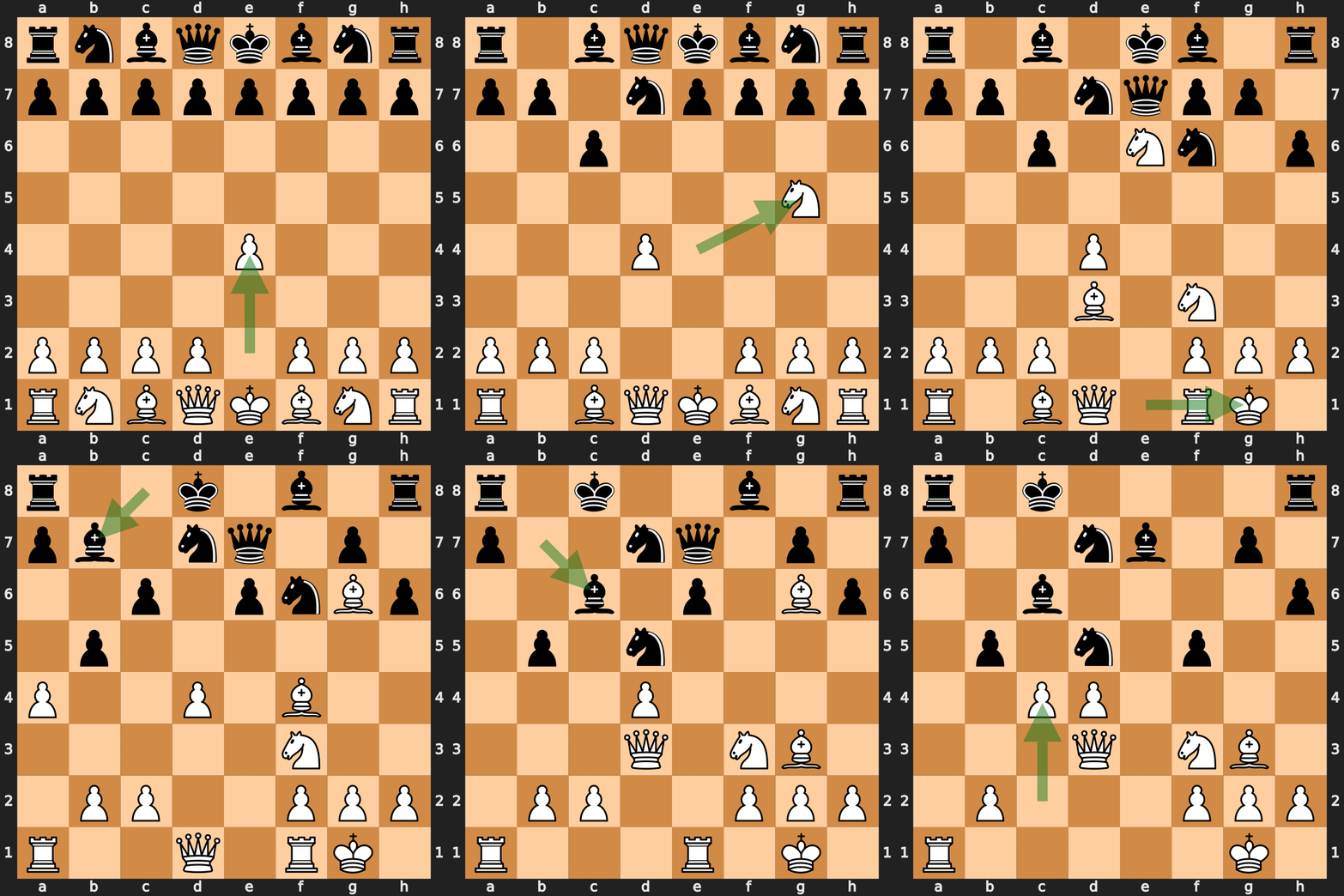
Morn / CC0
I could feel — I could smell — a new kind of intelligence across the table.
— Garry Kasparov
The Day a Machine Dethroned the King (1997)
On May 11, 1997, the IBM supercomputer Deep Blue defeated world chess champion Garry Kasparov in a six-game match, marking a pivotal moment in the history of artificial intelligence. Developed by computer scientists Feng-hsiung Hsu, Murray Campbell, and Joe Hoane, Deep Blue was the first machine to defeat a reigning world champion under standard tournament rules. This victory not only challenged the notion that chess required human intuition but also sparked global debate about the nature of intelligence. 1 2 3
Why it matters: Deep Blue’s triumph in 1997 was a watershed moment, illustrating the potential of AI to outperform humans in complex cognitive tasks. It prompted a reevaluation of what constitutes intelligence and set the stage for future advancements in AI across various domains.
Further reading:
Why This Mattered
Deep Blue's victory shattered the assumption that chess mastery required human intuition, becoming the most famous human-versus-machine contest of the twentieth century. It forced a worldwide reckoning with the question of what 'intelligence' really means and foreshadowed an era where AI would surpass humans in one domain after another.