The Desert Race Where Every Robot Failed
Fifteen autonomous vehicles attempted to cross 142 miles of Mojave Desert — the farthest made it just 7.4 miles, but the spectacular failure launched the self-driving car industry.
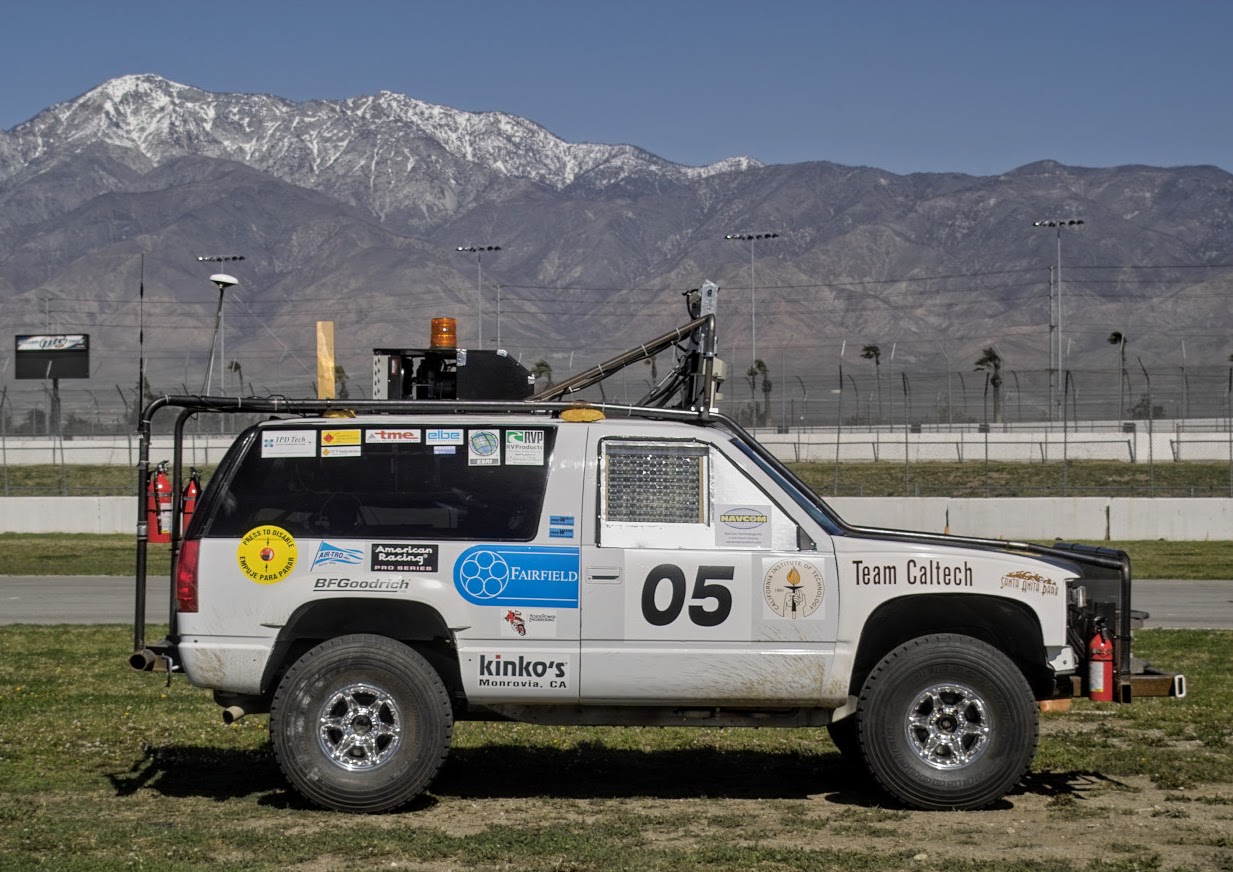
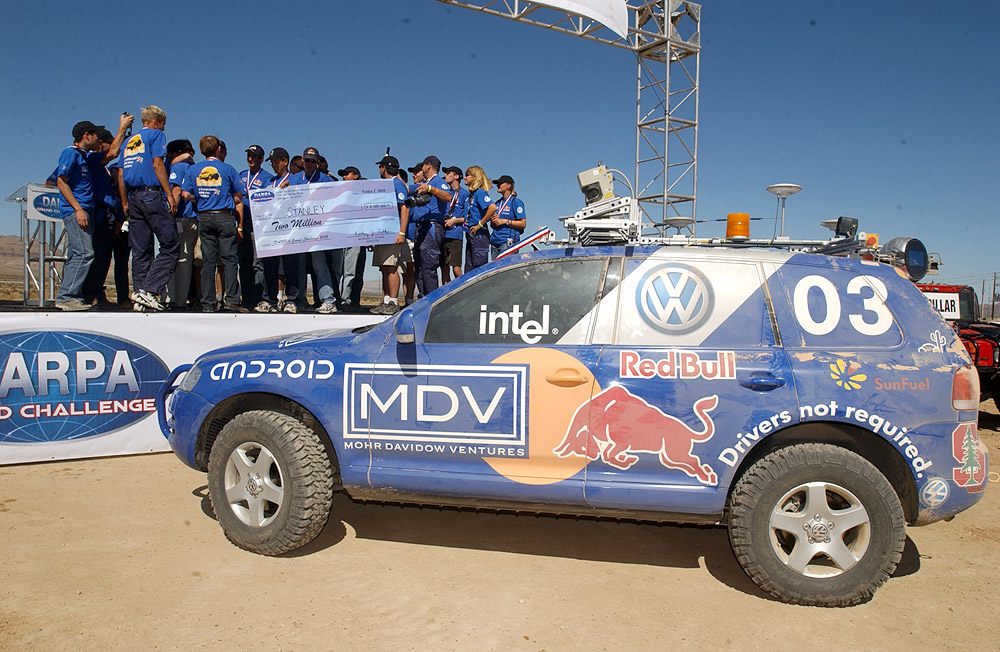
Dicklyon / CC BY-SA 4.0
We didn't have a winner today, but we accomplished what we set out to do — push the state of the art and inspire a community.
— Tony Tether
In 2004, the DARPA Grand Challenge saw 15 autonomous vehicles attempt a 142-mile desert course, but none succeeded, marking a pivotal moment in robotics history.
What happened: In 2004, the Defense Advanced Research Projects Agency (DARPA) launched the Grand Challenge, a competition offering a $1 million prize for an autonomous vehicle to complete a 150-mile desert course in the Mojave Desert. Despite the allure of the prize, none of the 15 participating vehicles managed to finish the course. The Carnegie Mellon University’s Red Team vehicle traveled the furthest, covering 7.32 miles before failing. [1] This event was organized by DARPA director Tony Tether and involved key figures like Sebastian Thrun, Red Whittaker, and Dave Hall.
Why it matters: Although the 2004 challenge was a public failure, it galvanized the robotics community. By 2005, five vehicles completed the course, and many participants went on to found autonomous vehicle programs at tech giants like Google, Uber, and Aurora. The event highlighted the challenges and potential of autonomous vehicle technology, setting the stage for future advancements in robotics and AI.
Further reading:
Why This Mattered
The 2004 DARPA Grand Challenge offered a $1 million prize for an autonomous vehicle to complete a 142-mile desert course. No vehicle came close, yet the public failure galvanized a generation of roboticists. By the 2005 rematch, five vehicles finished the course, and many participants went on to found the autonomous vehicle programs at Google, Uber, and Aurora.