The Therapist That Was Never Alive
A simple pattern-matching program fooled people into pouring out their hearts to a machine, revealing unsettling truths about human psychology.
Unknown authorUnknown author / Public domain
I had not realized … that extremely short exposures to a relatively simple computer program could induce powerful delusional thinking in quite normal people.
— Joseph Weizenbaum
The Therapist That Was Never Alive (1966)
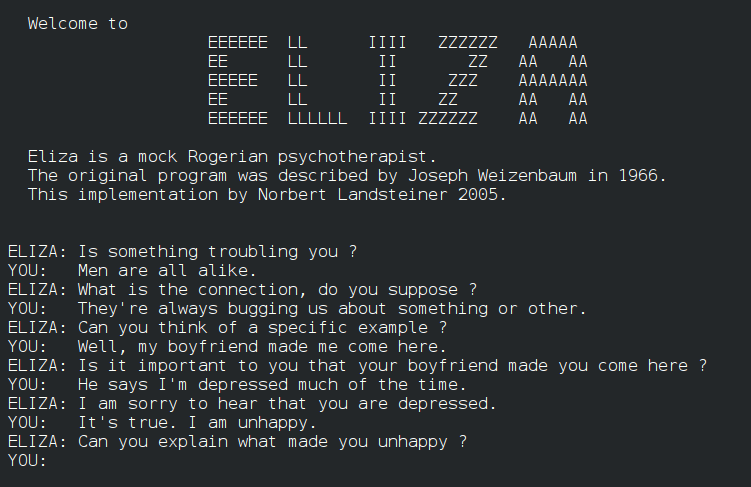
In 1966, MIT researcher Joseph Weizenbaum developed ELIZA, an early natural language processing program designed to simulate conversation. Using pattern matching and substitution, ELIZA could mimic human dialogue, particularly in the guise of a Rogerian psychotherapist, leading to the famous DOCTOR script. Weizenbaum, 1966 details how ELIZA’s simplistic approach still managed to convince users they were interacting with an intelligent entity.
Why it matters: ELIZA’s ability to create an illusion of understanding had profound implications. It demonstrated how easily people could anthropomorphize machines, a phenomenon now known as the ELIZA effect. This milestone remains crucial in discussions about modern chatbots and the ethics of human-computer interaction.
Why This Mattered
ELIZA demonstrated that even crude natural language processing could create a powerful illusion of understanding. It sparked the first serious debates about the ethics of human-computer interaction and revealed how readily people anthropomorphize machines — a phenomenon now called the ELIZA effect that remains central to discussions about modern chatbots.