The Paper That Invented the Computer Before It Existed
A 24-year-old mathematician imagined a universal machine on paper, laying the theoretical foundation for every computer — and every AI — that would follow.
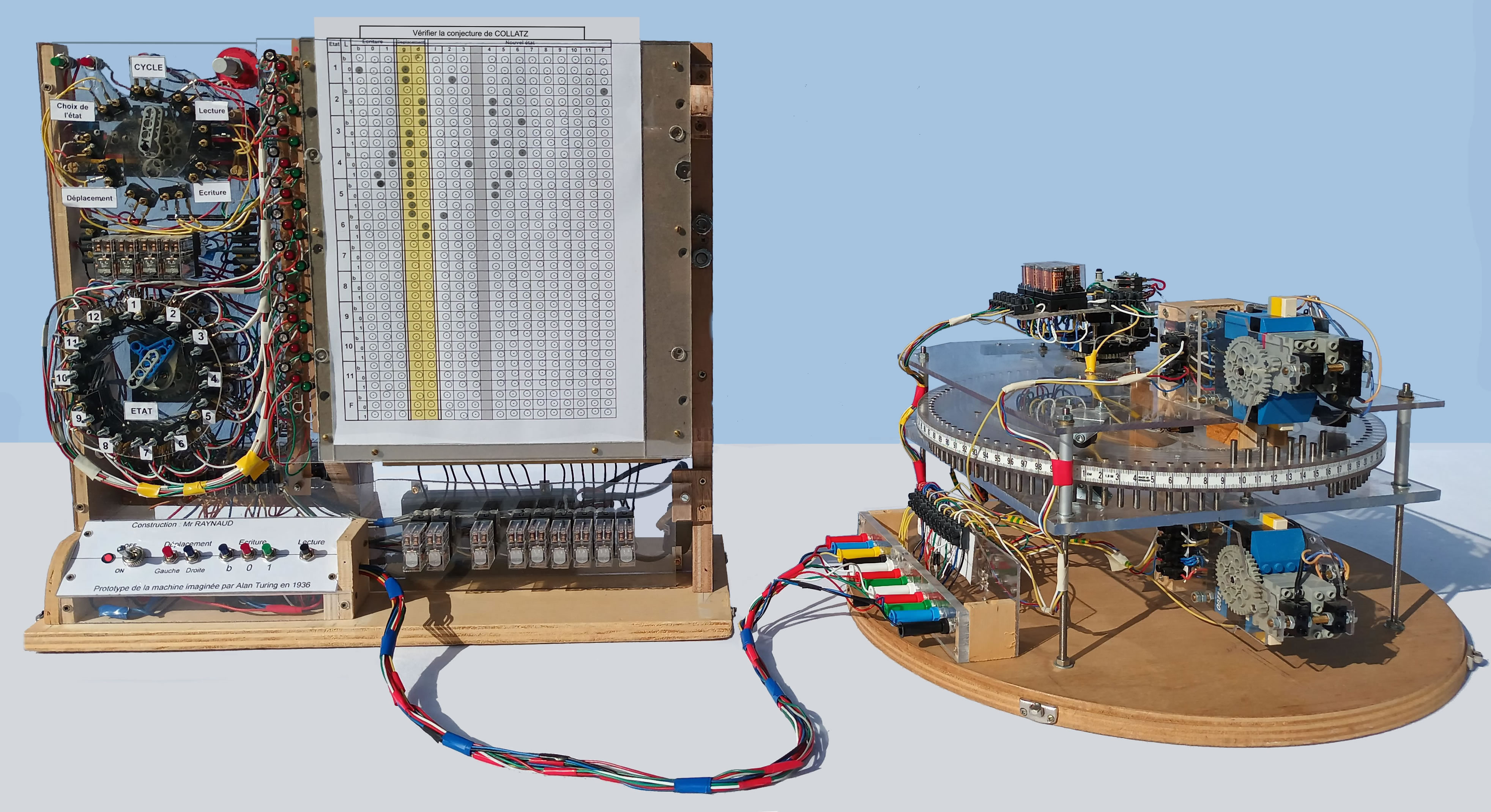
Raynaudmarc / CC BY-SA 4.0
We may compare a man in the process of computing a real number to a machine which is only capable of a finite number of conditions.
— Alan Turing
The Paper That Invented the Computer Before It Existed (1936)
In 1936, Alan Turing published a groundbreaking paper that laid the theoretical foundation for modern computing and artificial intelligence.
What happened: In 1936, Alan Turing published “On Computable Numbers, with an Application to the Entscheidungsproblem,” a paper that introduced the concept of a universal machine capable of computing anything that is computable. This work was contemporaneous with Alonzo Church’s lambda calculus and was influenced by discussions with mathematician Max Newman. Turing’s proof demonstrated that some mathematical problems are undecidable, meaning there is no algorithm that can solve them.
Why it matters: Turing’s paper established the theoretical limits of computation, defining what machines can and cannot do. The concept of the Turing machine became the foundational abstraction for computer science and artificial intelligence. Every question about the capabilities of computers and AI traces back to this seminal work.
Further reading:
Why This Mattered
Turing's 1936 paper introduced the concept of a universal machine capable of computing anything that is computable, establishing the theoretical limits of computation itself. The 'Turing machine' became the foundational abstraction for computer science and, by extension, for artificial intelligence — every question about what machines can or cannot do traces back to this paper.