The Checkers Player That Named a Revolution
Arthur Samuel's self-improving checkers program coined the term 'machine learning' and proved a computer could surpass its own creator.
Programming computers to learn from experience should eventually eliminate the need for much of this detailed programming effort.
— Arthur Samuel
The Checkers Player That Named a Revolution (1959)
In 1959, Arthur Samuel introduced the world to the concept of machine learning with his groundbreaking checkers-playing program.
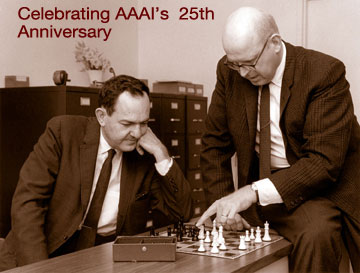
What happened: In 1959, Arthur Samuel, an American computer scientist, developed the Samuel Checkers-playing Program, which was one of the first successful self-learning programs. This program demonstrated the potential of machines to improve their performance through experience rather than relying solely on explicit instructions. Samuel’s work was so influential that he coined the term “machine learning” in the same year. Some Studies in Machine Learning Using the Game of Checkers details his pioneering research.
Why it matters: Samuel’s checkers program was a landmark achievement in the field of artificial intelligence. It proved that machines could surpass the skills of their creators, a concept that has shaped decades of research into self-improving systems. The program’s ability to learn and adapt set the stage for future developments in AI and machine learning.
Further reading:
Why This Mattered
Arthur Samuel's checkers program was the first widely recognized demonstration of a computer learning from experience rather than following explicit instructions. His 1959 paper introduced the phrase 'machine learning' into the scientific lexicon. The program's ability to defeat Samuel himself at checkers became a landmark proof that machines could improve beyond their programmer's skill, shaping decades of research into self-improving systems.